Drywood termites (Incisitermes snyderi and Cryptotermes brevis) target dry structural lumber and architectural framing without requiring soil contact or moisture tubes from the ground. Unlike subterranean termites that…
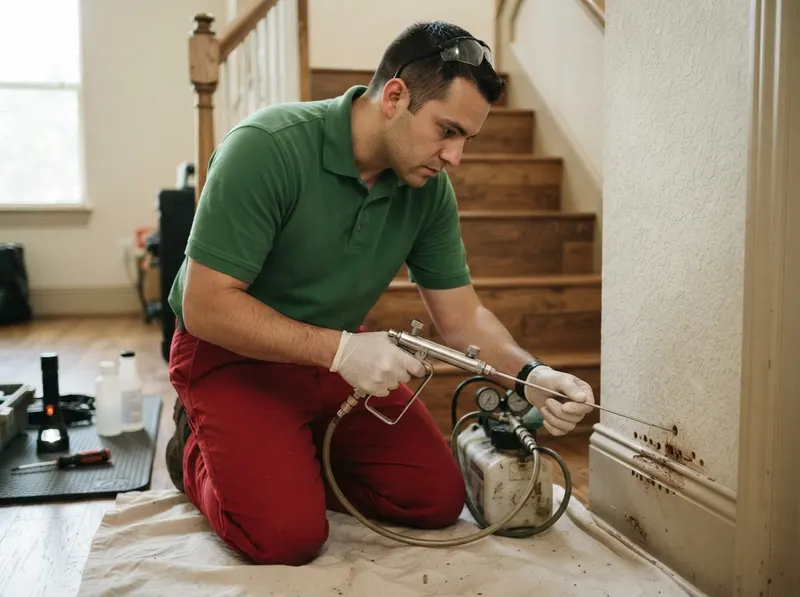
Drywood termites (Incisitermes snyderi and Cryptotermes brevis) target dry structural lumber and architectural framing without requiring soil contact or moisture tubes from the ground. Unlike subterranean termites that migrate through foundation cracks along bayou soil margins, drywood termite swarmers enter homes directly through exterior attic vents, soffits, and unprotected roof gables during humid coastal evenings. In historic neighborhoods like The Heights and Montrose, original heart-pine framing, tongue-and-groove siding, and exposed joists provide mature feeding environments. Localized injection targets these discreet locations by accessing the central nursery chambers where the colony works, leaving surrounding living spaces undisturbed.
Decision guidance depends on the geographic boundary of the infestation across the home. If wood pellets, known as frass, accumulate beneath a specific door casing, built-in bookshelf, or attic rafter in Meyerland or Oak Forest, precision wood-void injection resolves the pocket directly. If pellets drop simultaneously across multiple unconnected rooms on separate floors, whole-home structural fumigation becomes necessary. The primary trade-off is treatment invasiveness versus scope: spot treatment preserves interior routines, eliminates the need for multiday home evacuation, and secures structural integrity at a fraction of whole-home tenting costs, provided the gallery borders are confirmed by an inspector.
Technical execution relies on exact access protocols. Technicians drill 1/8-inch indicator ports directly into the wood voids along the kickout holes where frass is ejected. Using precision pressure injectors, a measured dose of non-repellent transfer foam or borate powder is driven through the internal galleries. As worker termites clean and groom each other, the material distributes through the entire localized population within 7 to 14 days. Technicians seal all drill ports with matching wooden dowels or acrylic timber compound, protecting structural integrity in properties throughout River Oaks, Memorial, and West University Place.
Every job gets a firm, written price after a free on-site visit.
Tell us about your drywood termite spot and wood-void treatment job in Houston and we'll send a clear, written quote, usually the same day.
 Bayou Hawk Pest Control