Thermal bed bug remediation provides Houston residents with an immediate, non-toxic pathway to restore sleeping spaces compromised by persistent Cimex lectularius infestations. In humid Gulf Coast climates, ambient…
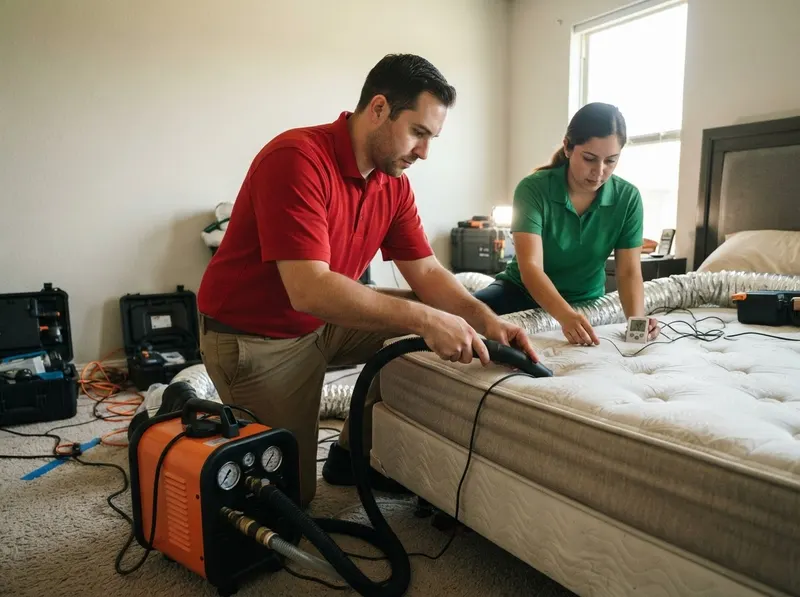
Thermal bed bug remediation provides Houston residents with an immediate, non-toxic pathway to restore sleeping spaces compromised by persistent Cimex lectularius infestations. In humid Gulf Coast climates, ambient relative humidity often exceeds 70%, which allows indoor insect populations to reproduce continuously without winter dormancy. Traditional over-the-counter chemical sprays often fail because localized bed bug strains carry metabolic resistance to common synthetic pyrethroids; liquid applications also miss unhatched eggs hidden behind electrical faceplates and interior trim. Convective heat treatment bypasses pesticide resistance entirely by denaturing the vital proteins of eggs, nymphs, and adult insects once core structural temperatures hold steady above 122°F for at least 90 minutes.
Every structure in Harris County presents unique heat-sink challenges that require precise thermal management. Pier-and-beam bungalows in The Heights and Montrose often experience rapid heat dissipation through ventilated crawlspaces, requiring supplementary floor baffles to trap rising warmth. In contrast, modern multistory construction in West University Place, River Oaks, and Memorial features dense spray-foam insulation that retains heat quickly, requiring calibrated industrial air movers to prevent hot spots from exceeding 140°F near delicate electronics. Slab-on-grade foundations common in Meyerland, Clear Lake, Kingwood, and Oak Forest require floor-level sensor probes, because concrete ground slabs absorb substantial thermal energy before the surrounding carpet tacks and baseboards reach the required 120°F lethal threshold.
Selecting thermal remediation represents an explicit operational trade-off between speed and preparation effort. While heat treatment eliminates an active infestation in a single afternoon without leaving residual chemical film on bedding, homeowners must invest 3 to 5 hours prior to technician arrival removing heat-sensitive items. Wax candles, pressurized aerosol containers, vinyl records, fine oil paintings, and fresh groceries melt or burst under sustained 130°F heat and must be isolated or staged in refrigerated areas. For severe, multi-room infestations in single-family homes, whole-structure thermal application prevents insects from scattering into adjacent rooms, making it a reliable solution compared to multi-week chemical re-treatments that disrupt household routines.
Every job gets a firm, written price after a free on-site visit.
Tell us about your thermal bed bug remediation job in Houston and we'll send a clear, written quote, usually the same day.
 Bayou Hawk Pest Control